




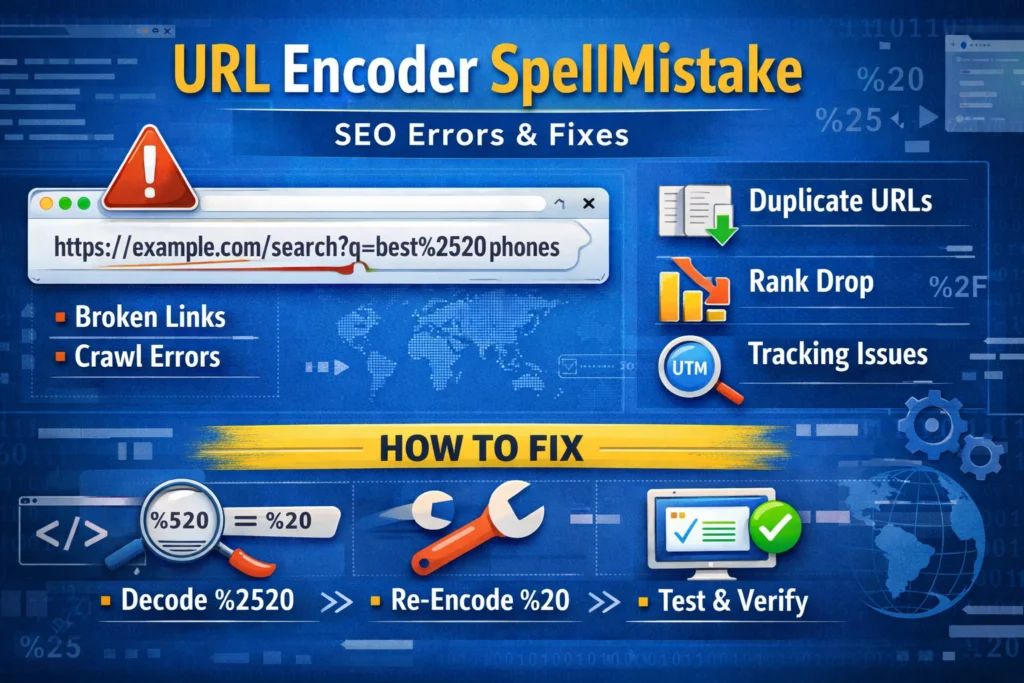
Navigating the digital world often requires handling URLs with precision. Have you ever clicked a link only to get an error or a strange page? Sometimes, this isn’t due to the website itself but a URL decoder spellmistake. Simply put, it happens when a URL contains incorrectly encoded characters or spelling errors during decoding, causing browsers or tools to misinterpret the link.
Imagine typing %2F (which represents /) incorrectly or mistyping part of a web address. A small error can lead to broken links, misrouted traffic, or even data submission failures on websites. While these mistakes may seem minor, they can have significant consequences, especially for digital marketers, web developers, and everyday users trying to access information.
How URL Decoder Spellmistakes Occur
There are several reasons these mistakes happen:
-
Manual Typing Errors: When someone copies or types a URL without attention to encoding characters.
-
Incorrect Encoding Tools: Using tools that misinterpret special characters during conversion.
-
Software Bugs: Some browsers or apps might mishandle encoding and decoding, producing broken URLs.
-
Complex Query Strings: URLs with long parameters are more prone to accidental errors.
I once spent hours debugging a link on a client’s website that wouldn’t load. After much frustration, I realized the issue was a simple %20 representing a space that had been incorrectly typed as %2O (letter O instead of zero). One tiny spelling mistake disrupted the entire user experience.
Why It Matters for SEO and User Experience
Even minor URL mistakes can affect:
-
Search Engine Ranking: Broken links reduce crawl efficiency and harm SEO.
-
User Experience: Visitors encountering errors might abandon the site.
-
Analytics Accuracy: Misrouted traffic can skew performance reports.
A well-formed URL, correctly decoded, ensures both humans and machines can access the intended page effortlessly.
Tools and Techniques to Correct URL Decoder Mistakes
Fixing URL decoder spellmistakes doesn’t require advanced knowledge. Several approaches are effective:
| Method | Pros | Cons |
|---|---|---|
| Manual Checking | Full control over errors | Time-consuming for long URLs |
| Online URL Decoder Tools | Fast and accurate for common mistakes | Limited for very complex URLs |
| Browser Debugging | Immediate testing during navigation | Requires some technical understanding |
| Script-based Validation | Automates repetitive tasks | Needs coding knowledge |
By combining these techniques, you can catch mistakes early and maintain consistent link performance.
-
Business Implications of URL Decoder Spellmistakes
Consider an e-commerce website running a large promotional campaign. Thousands of product URLs were included in emails and social media posts. Due to a URL decoder spellmistake, a handful of URLs had %2F replaced with a lowercase letter o. This led to checkout pages failing to load.
The result? Lost sales, frustrated customers, and extra work for the IT team. By using an automated URL validation tool before the campaign, the company could have avoided the issue entirely. This example highlights how crucial it is to address even minor URL decoding errors proactively.
Best Practices to Prevent URL Decoder Spellmistakes
-
Double-Check Manually Typed URLs: Especially when embedding links in emails or social posts.
-
Use Reliable Decoding Tools: Always verify output for accuracy.
-
Keep URLs Simple: Avoid overly complex query strings whenever possible.
-
Test URLs Across Browsers: Different browsers may handle encoding differently.
-
Automate Validation: For websites with frequent updates, automated scripts catch mistakes before they reach users.
Unique Value: Seamless Link Management
The key takeaway is not just identifying errors but establishing a process that ensures URLs are always user- and SEO-friendly. Correctly decoded URLs improve accessibility, prevent broken links, and maintain professional credibility online. Businesses that implement proactive URL management save time, improve conversions, and enhance trust among users.
Read More: Sitemap Generator by SpellMistake Tool Guide
Conclusion
A URL decoder spellmistake may seem trivial, but its impact can ripple through user experience, SEO, and operational efficiency. From manual errors to tool misconfigurations, understanding why these mistakes happen and how to fix them is crucial for anyone managing a website. By following the best practices outlined here and leveraging reliable tools, you can ensure smooth navigation, accurate analytics, and a seamless digital experience for your audience.
FAQs
Q1: What exactly is a URL decoder spellmistake?
A: It occurs when a URL is incorrectly decoded due to typos or misinterpreted characters, leading to broken links or errors.
Q2: How can I check if a URL has decoding mistakes?
A: Use online URL decoder tools or browser debugging features to identify misencoded characters.
Q3: Are URL decoder spellmistakes common?
A: They’re not rare, especially in URLs with long query strings, manually typed links, or automated tool outputs.
Q4: Can broken URLs affect SEO?
A: Yes, search engines may reduce crawl efficiency, which can impact rankings and user trust.
Q5: How can businesses prevent these mistakes in large campaigns?
A: Automated validation tools, thorough testing, and using simple URLs minimize the risk of decoding errors.